


Non-contact Bridge Static and Dynamic Deflection Testing Technology
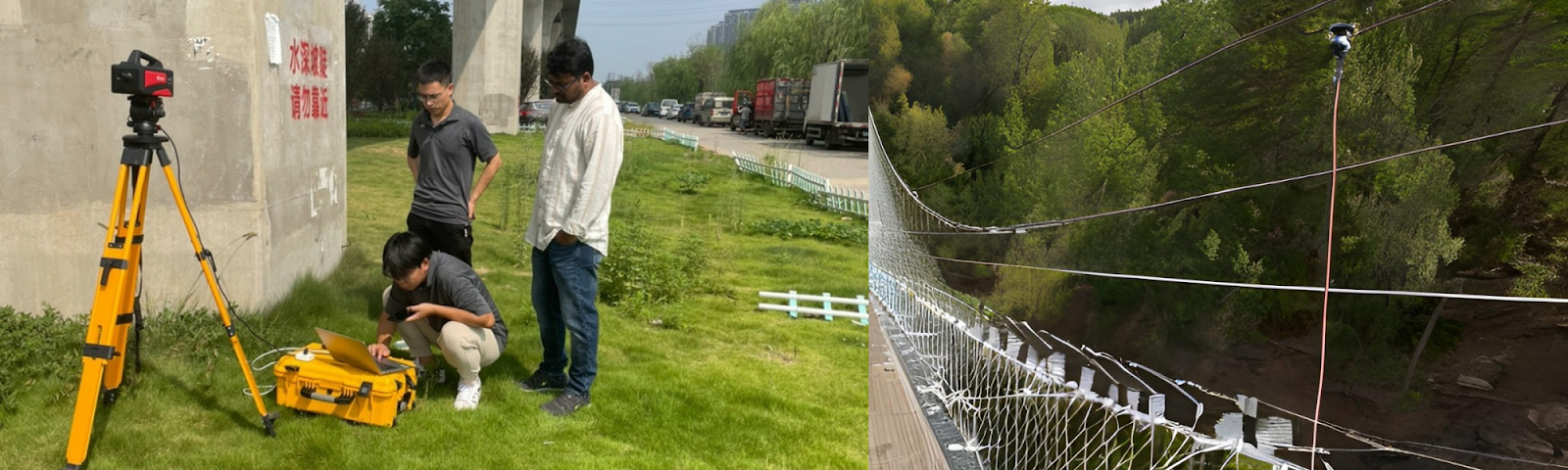
Non-contact Bridge Static and Dynamic Deflection Testing Technology
Before knowing Non-contact Bridge Static and Dynamic Deflection Testing Technologies, let's know about What is Deflection Testing?
Deflection Testing is a method used to measure the degree to which a structural element, such as a beam, slab, or bridge, bends or displaces under a load. The deflection is typically measured as the distance the element moves from its original position due to the applied load. This testing is essential for ensuring that structures can withstand the loads they are subjected to during their service life without experiencing excessive deformation that could compromise safety or functionality. Deflection Testing Techniques
Deflection testing encompasses a variety of techniques and methodologies. Here's a closer look at some key aspects:
- Types of Loads: Deflection testing can be conducted using different types of loads, including static loads (constant weight) and dynamic loads (varying or moving weight). Each type provides valuable insights into the behavior of the structure under different conditions.
- Measurement Tools: Advanced tools and instruments are used to precisely measure deflection. Common tools include:
- Dial Gauges: These provide accurate readings of small deflections.
- Laser Scanners: Used for high-precision measurements over larger areas.
- Accelerometers: Helpful in measuring dynamic responses to moving loads.
- Testing Standards: Various standards and guidelines govern deflection testing, ensuring safety and reliability. These standards outline acceptable deflection limits, testing procedures, and reporting methods.
Importance of Non-contact Bridge Static and Dynamic Deflection Testing Technologies
- Safety Assessment: Non-contact methods eliminate the risk of damaging the structure during testing, making them ideal for assessing the safety of bridges without imposing additional loads.
- Real-time Monitoring: Many non-contact technologies allow for continuous monitoring of deflection, providing real-time data that can help in early detection of potential issues.
- Cost-Effectiveness: By reducing the need for extensive scaffolding or other intrusive measures, non-contact testing can lower the overall cost of inspections while maintaining accuracy.
- Versatility: Non-contact technologies can be applied to a variety of structures beyond bridges, including buildings, dams, and towers, showcasing their adaptability in different engineering contexts.
Understanding deflection testing and its methodologies is crucial for engineers and inspectors tasked with evaluating the integrity of structures. As technology continues to evolve, non-contact testing methods are increasingly becoming the preferred choice for ensuring the safety and longevity of critical infrastructure. By leveraging these advanced techniques, we can enhance our ability to monitor and maintain the structures that are vital to our daily lives.
Where is Deflection Testing Used?
Deflection testing is used in various fields, particularly in civil and structural engineering, where it plays a crucial role in assessing the performance and safety of structures. Below are some of the key areas where deflection testing is applied:
1. Bridge Engineering
- Application: Bridges are subjected to various loads, including traffic, wind, and environmental factors. Deflection testing is used to monitor how much the bridge bends or moves under these loads, ensuring it remains within safe limits.
- Purpose: To detect potential structural weaknesses and prevent failure by ensuring the bridge can handle dynamic loads (like vehicles) and static loads (like its own weight).
2. Building Structures
- Application: In buildings, deflection testing is used to measure how beams, columns, and floors deflect under the weight of the structure and any additional loads like furniture, equipment, or people.
- Purpose: To ensure that floors do not sag excessively, which could lead to structural damage, cracking, or even collapse.
3. Roads and Pavements
- Application: Deflection testing is used in pavement engineering to assess how much a road surface bends under the weight of traffic. This is important for determining the pavement's ability to withstand loads without cracking or rutting.
- Purpose: To design and maintain durable pavements that can support heavy traffic without requiring frequent repairs.
4. Aircraft Runways
- Application: Runways need to support the significant loads of landing and taking off aircraft. Deflection testing measures how much the runway surface bends under these loads.
- Purpose: To ensure the runway remains level and intact, preventing damage to aircraft and ensuring safe operations.
5. Structural Health Monitoring
- Application: Deflection testing is part of a broader approach known as structural health monitoring (SHM), used in long-term monitoring of infrastructure like bridges, buildings, and dams.
- Purpose: To continuously monitor the health of a structure, detecting changes in deflection patterns that might indicate damage or deterioration over time.
Deflection testing in engineering, particularly in the context of structures like bridges, buildings, and pavements, is essential for ensuring that these structures can safely handle the loads they are designed for. Below is an overview of the types, methods, and technologies used in deflection testing.
Types of Deflection Testing
1. Static Deflection Testing
- Description: Measures the deflection of a structure under a steady or gradually applied load.
- Application: Commonly used for evaluating how beams, bridges, and floors behave under static loads such as dead loads (permanent, stationary loads) or a parked vehicle.
2. Dynamic Deflection Testing
- Description: Assesses the deflection of a structure when subjected to moving or time-varying loads.
- Application: Used in scenarios involving traffic on bridges, wind-induced vibrations in tall structures, or seismic activity.
3.Non-Contact Deflection Testing
- Description: Utilizes advanced sensing technologies to measure deflection without physical contact with the structure.
- Application: Ideal for situations where direct access is difficult or where continuous monitoring is required, such as in bridge monitoring or tall buildings.
4. Long-Term Deflection Testing (Creep Testing)
- Description: Monitors deflection over an extended period under a constant load, analyzing creep behavior.
- Application: Useful for materials and structures like concrete that exhibit creep, providing insights into long-term performance.
5. Instantaneous Deflection Testing
- Description: Measures the immediate deflection of a structure as soon as a load is applied.
- Application: Typically used to evaluate the initial elastic response of structures or materials.
Methods of Deflection Testing
1. Visual Inspection and Manual Measurement
- Description: The simplest method, involving direct observation and manual measurement of deflection using rulers, tapes, or other basic tools.
- Application: Used in preliminary assessments or where high precision is not required.
2. Dial Gauges and Deflection Gauges -
Description: Mechanical devices that measure the amount of deflection by registering the movement of a pointer on a scale.
- Application: Common in laboratory settings or for field tests where direct measurement is possible.
3. Strain Gauges
- Description: Devices that measure the strain on a material, which can be correlated to deflection using material properties and load data.
- Application: Widely used in both static and dynamic testing, particularly in materials testing and structural monitoring.
4. Laser Doppler Vibrometry (LDV)
- Description: A non-contact method that uses laser beams to measure the velocity and displacement of a vibrating surface, from which deflection can be derived.
- Application: Ideal for dynamic deflection testing of bridges, towers, and other large structures, allowing for high precision without requiring physical contact.
5. Photogrammetry
- Description: A non-contact method that uses photographs taken from different angles to create a 3D model of the structure, allowing deflection measurements to be taken.
- Application: Used in large-scale structural assessments, such as monitoring bridge deflection under load.
6. LIDAR (Light Detection and Ranging)
- Description: Uses laser pulses to measure distances and create high-resolution 3D models of the structure, from which deflection can be analyzed.
- Application: Suitable for monitoring large structures like bridges, dams, and towers, often used in conjunction with other technologies for comprehensive analysis.
7. Fiber Optic Sensors
- Description: Use light transmission through fiber optic cables to measure strain and deformation, which can be related to deflection.
- Application: Ideal for long-term monitoring of critical infrastructure, such as bridges and tunnels, where continuous data collection is necessary.
8. Radar Interferometry
- Description: A remote sensing technique that uses radar waves to measure the displacement of a structure by analyzing the phase difference between reflected signals.
- Application: Useful for monitoring large structures like bridges and dams, particularly in detecting small deflections over large areas.
9. Accelerometers
- Description: Sensors that measure acceleration, which can be integrated to obtain velocity and displacement (deflection).
- Application: Common in dynamic deflection testing, particularly in monitoring seismic responses or traffic-induced vibrations in structures.
Technologies in Deflection Testing
1. Total Stations
- Description: Advanced surveying instruments that measure angles and distances to determine the deflection of structures.
- Application: Often used in bridge and building deflection monitoring, providing accurate data on structural movement.
2. Digital Image Correlation (DIC)
- Description: A non-contact optical method that analyzes the displacement of patterns on the surface of a structure to measure deflection.
- Application: Used in laboratory and field tests for detailed analysis of deflection patterns.
3. Remote Sensing Drones
- Description: Unmanned aerial vehicles equipped with cameras, LIDAR, or other sensors to capture data on structural deflection from the air.
- Application: Useful for inspecting and monitoring large structures like bridges, dams, and towers in hard-to-reach areas.
4. Embedded Sensor Network
- Description: Networks of sensors embedded within a structure to provide continuous monitoring of deflection and other structural health parameters.
- Application: Used in critical infrastructure like bridges, tunnels, and high-rise buildings for real-time monitoring and alert systems.
What is Non-Contact Testing? How important is it?
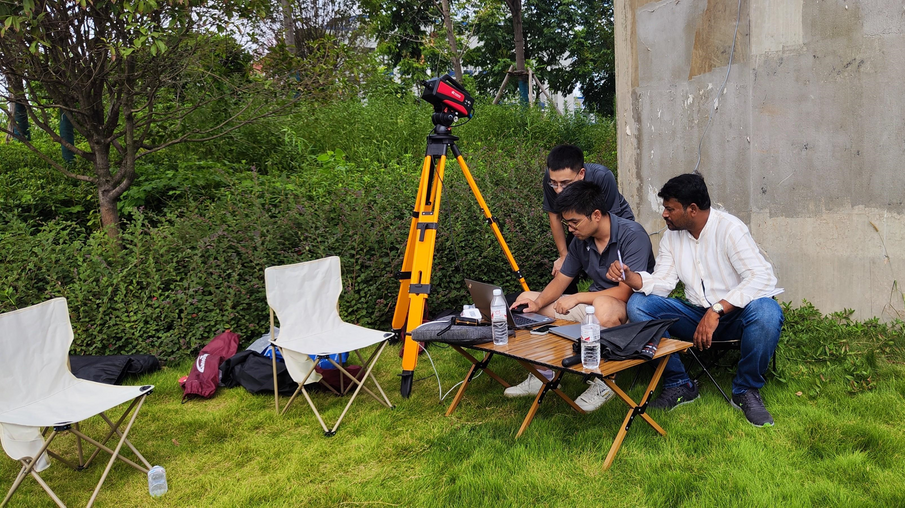
Non-Contact Testing: Though it may sound complicated, non-contact testing essentially refers to any kind of evaluation for determining the structural integrity of bridges without making physical contact with the bridge structure. This is usually performed by advanced capture techniques like laser scanning, photogrammetry and digital image correlation. Using these techniques, data is collected by engineers without putting people or the bridge at risk.
Challenges of Using Sensors in Industrial Settings
- Time and Energy Consumption: The installation and removal of sensors are time-intensive tasks that also require a considerable amount of energy. This can lead to inefficiencies in operations and increased labor costs.
- Susceptibility to Damage: Sensors are vulnerable to damage when exposed to harsh working environments. Factors such as extreme temperatures, humidity, dust, and physical impact can impair their functionality and lifespan.
- Limited Measurement Capabilities: Typically, a single sensor is designed to measure one-dimensional displacement and operates at a very low frequency. This limitation restricts the range of data that can be captured and necessitates the use of multiple sensors for comprehensive monitoring.
- High Costs: Equipping a single facility with the necessary number of sensors can be quite expensive. The cumulative costs of purchasing, installing, maintaining, and replacing sensors can significantly impact the overall budget of a project or operation.
- By addressing these challenges, industries can work towards more efficient and cost-effective solutions for monitoring and data collection.
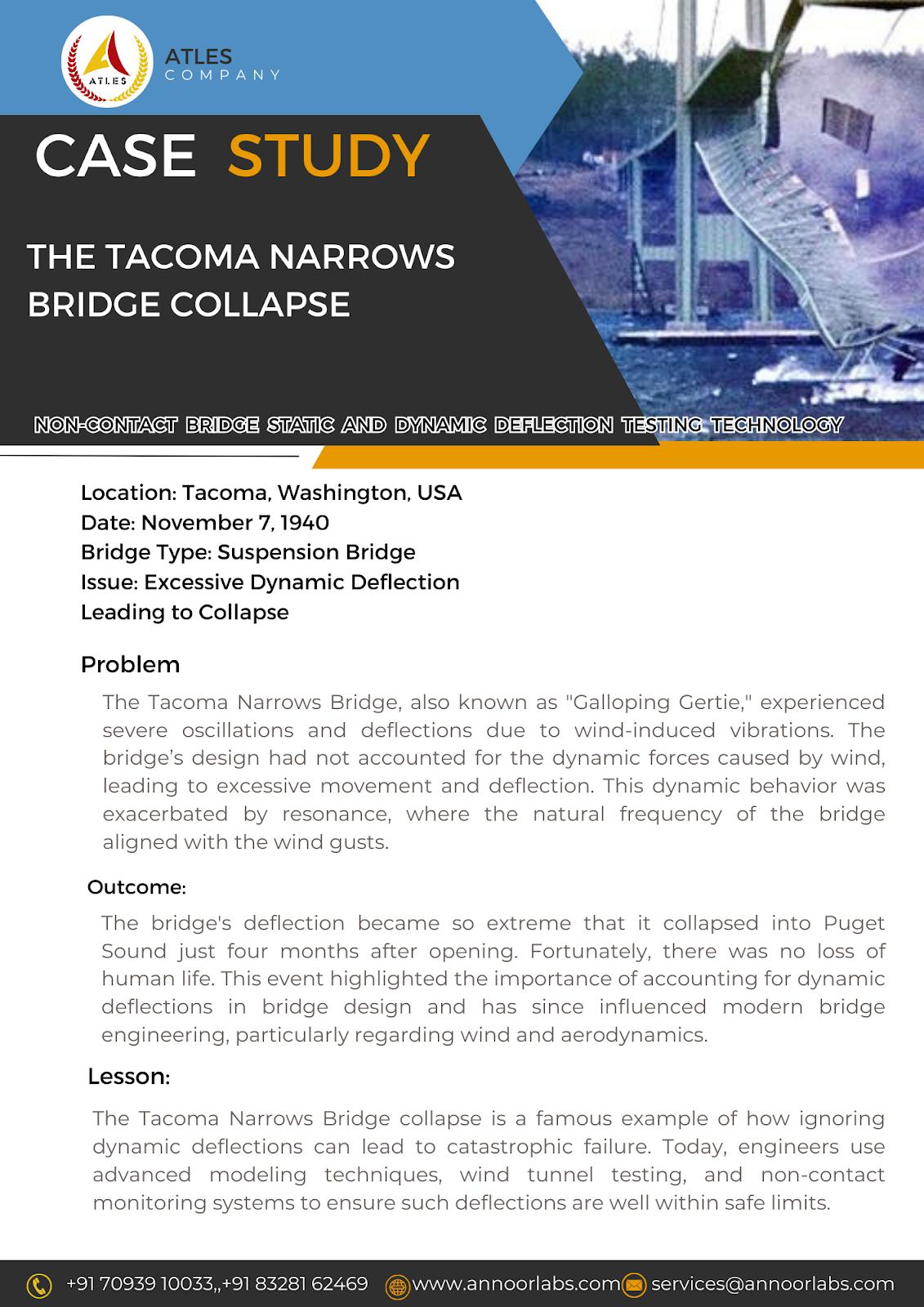
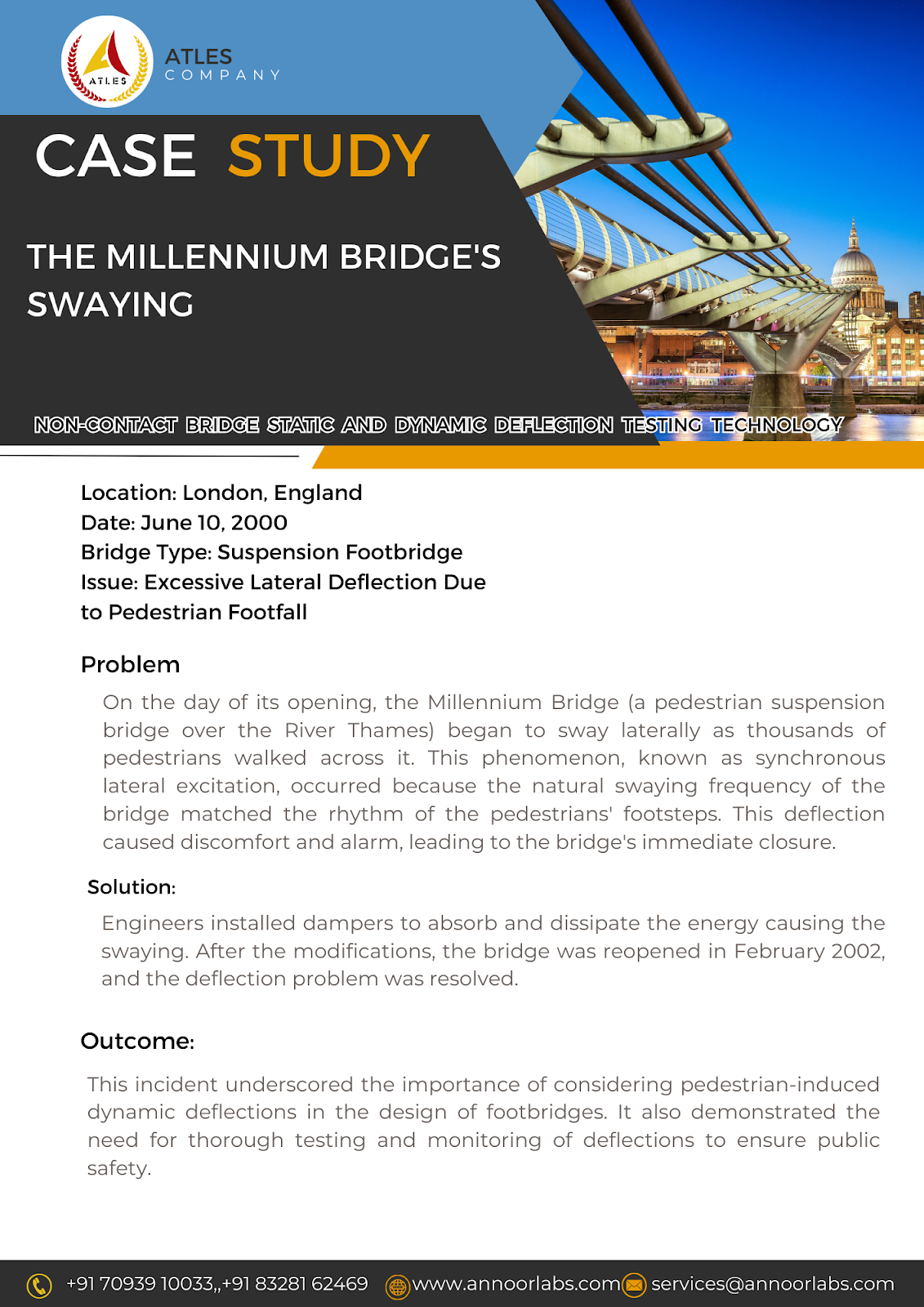
Case Studies

Advantages of Non-Contact Testing Technology
Non-contact methods are beneficial for a number of reasons:
The Benefits of Modern Bridge Inspection Technologies
When it comes to maintaining the safety and functionality of our bridges, modern inspection technologies offer several significant advantages. Here are some key benefits:
1. Enhanced Security:
Our team prioritizes reducing risks for both people and potential scaffolding or contact. By using advanced technologies, we can conduct thorough inspections without endangering workers or pedestrians, ensuring a safer inspection process.
2. Improved Precision:
New technology provides the ability to measure structural integrity with remarkable precision. This enhanced capability allows us to gain better insights into how our structures age over time, enabling us to predict and address potential issues before they become critical.
3. Increased Efficiency:
Modern inspection methods can often be performed much more quickly than traditional techniques. This efficiency means inspections can be completed without causing significant traffic disruptions, maintaining the flow of daily activities and minimizing inconvenience to the public.
4. Minimal Setup Requirements:
One of the standout benefits of these technologies is that they require no large setups. Inspections can be implemented seamlessly, causing minimal disruption to the bridge and its users. This streamlined process ensures that the structural assessments are both effective and unobtrusive.
the integration of modern technology in bridge inspections enhances security, precision, and efficiency while reducing disruption. These advancements not only ensure the longevity and safety of our infrastructure but also contribute to a smoother and safer experience for all bridge users.
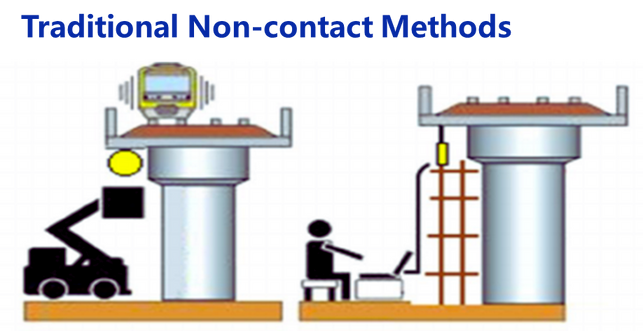
t of traditional contact method
- Installing and removing sensors consumes both time and energy.
- Sensors are prone to damage in harsh working conditions.
- A single sensor can only measure one-dimensional displacement at a very low frequency.
- A single facility requires numerous sensors, which can be quite costly.
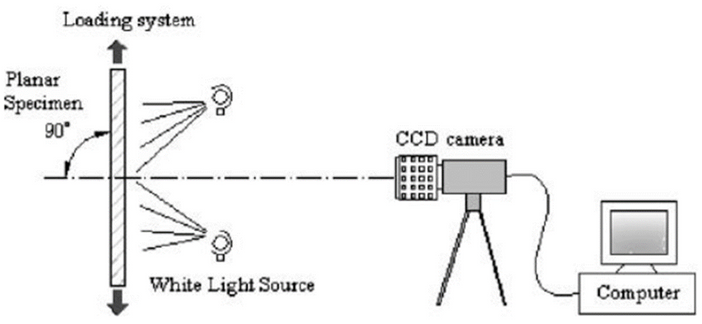
Components of measuring system
Non contact Measurement Technologies
There are a number of technologies that facilitate noncontact testing•
Laser Scanning – This technology employs the use of laser beams to obtain detailed 3d models of a bridge i.e. its geometry, as well as any deformations present in it.
Photogrammetry: Multiple photographs are taken from various angles that create 3D models to assist in the analysis of bridge conditions.
Digital Image Correlation (DIC) : This method is used to evaluate an image taken before and after the application of loads in order to test dynamic behavior.
Applications of Non-Contact Dynamic Deflection Testing
Non-contact dynamic deflection testing is a powerful technique used across various fields to measure and analyze the deflection and dynamic response of structures and materials without physical contact. Here are different applications of this technology:
1. Civil Engineering:
- Bridge Inspection: Monitors the dynamic behavior of bridges under traffic loads, detecting issues such as fatigue, cracking, and deformation. Non-contact methods like laser Doppler vibrometers or high-speed cameras can assess bridge health and performance efficiently.
- Building Assessment: Evaluates the response of buildings to dynamic loads such as wind or seismic activity. This helps in assessing structural integrity and safety, particularly in high-rise buildings and complex structures.
- Pavement and Road Testing: Measures the deflection and performance of pavements and roads under vehicle loads to detect weaknesses or design flaws and guide maintenance and repair strategies.
2. Aerospace Industry:
- Aircraft Testing: Assesses the dynamic behavior of aircraft components, such as wings and fuselage sections, during tests. This helps in optimizing design for performance and safety, and ensuring components meet rigorous standards.
- Spacecraft Monitoring: Monitors the structural health of spacecraft components during launch and operational conditions, providing crucial data to ensure the spacecraft’s integrity and functionality in space environments.
3. Mechanical Engineering:
- Component Testing: Evaluates the deflection and dynamic response of mechanical components, such as rotating machinery or automotive parts, to optimize performance and detect potential issues before they lead to failure.
- Material Testing: Analyzes the dynamic properties of materials, such as composites or metals, to understand their behavior under stress and improve material design and manufacturing processes.
4. Infrastructure Monitoring:
- Dams: Monitors the structural health of dams, detecting deformation or movement due to water pressure, seismic activity, or other factors. This helps in maintaining dam safety and preventing potential failures.
- Tunnels: Assesses the behavior of tunnel linings and supports, especially under load or environmental changes, to ensure the tunnel remains stable and safe for use.
5. Historical and Heritage Conservation:
- Preservation: Provides a non-invasive method to monitor the health of historical and heritage structures, such as ancient buildings or monuments, ensuring their preservation without causing additional damage.
- Condition Assessment: Detects subtle structural changes or stress in heritage sites, which can inform conservation efforts and maintenance strategies.
6. Sports Engineering:
- Equipment Testing: Analyzes the performance of sports equipment, such as skis, tennis rackets, or bicycles, to improve design and functionality based on dynamic response data.
- Facility Monitoring: Ensures the safety and performance of sports facilities, such as stadiums and arenas, by monitoring their structural responses to dynamic loads and usage.
7. Automotive Industry:
- Vehicle Testing: Monitors the dynamic behavior of vehicle components under operational conditions, such as suspension systems or chassis, to improve design and safety.
- Performance Evaluation: Assesses how vehicle parts respond to different dynamic loads and stresses, helping to ensure reliability and performance.
8. Research and Development:
- Experimental Studies: Supports research into new materials, construction techniques, or design methodologies by providing detailed data on structural and material behavior under various conditions.
- Prototype Testing: Evaluates prototypes in a non-invasive manner, allowing researchers and engineers to refine designs and improve performance before full-scale production.
9. Utilities and Facilities:
- Power Plants: Monitors the health of structural components in power plants, such as cooling towers or reactor vessels, ensuring safety and operational efficiency.
- Water Treatment Facilities: Assesses the structural integrity of facilities involved in water treatment and distribution, ensuring they remain functional and safe.
10. Environmental Monitoring:
- Natural Disaster Response: Provides rapid assessment of structures affected by natural disasters like earthquakes or floods, helping in damage evaluation and recovery planning.
- Climate Impact Studies: Evaluates the impact of environmental factors such as temperature and humidity on structural performance, aiding in the design of resilient infrastructure.
In each of these applications, non-contact dynamic deflection testing offers advantages such as reducing the risk of damage during inspections, providing high-resolution data, and enabling
Unique Features
01. HIGH PRECISION
Real-time calculation of 0.001mm-level high-precision displacement data.
02. HIGH FREQUENCY
Professional-grade industrial camera and combination of special data processing and data transmission technology.
03. LONG DISTANCE MEASUREMENT
Meet the requirements of 1,000m long-distance measurement.
04. PROFESSIONAL
Professional-grade industrial camera and combination of special data processing and data transmission technology.
I05.MAGE ENHANCEMENT
Based on image sharpness evaluation criteria, adaptively improve and enhance image quality.
06.MULTIPLY FUNCTIONS
Multiple functions, such as impact coefficient, damping ratio, spectrum analysis and ultra-limit alarm are readily available.
CODE SPECIFICATIONS
- Highway Bridge Load Testing Procedures (JTG-T-J21-01-2015)
- Technical Code for Monitoring of Building and Bridge Structures (GB50982-2014)
- Code for Engineering Surveying of Urban Railway System(GB ∕ T 50308-2017)
- Code for Engineering Surveying (GB 50026-2016)
- Technical Specification for Bridge and Tunnel Structure Safety Monitoring(DB4201/T624-2020)
- Technical code for monitoring and measurement of soft rock tunnel(T/CSPSTC40-2019)
Non-Contact Bridge Static and Dynamic Deflection Testing Technology Q&A
1. What is Non-Contact Bridge Deflection Testing Technology?
- Question: What is the principle behind non-contact deflection testing technology, and how does it differ from traditional contact-based methods?
- Answer: Non-contact bridge deflection testing technology utilizes sensors like LIDAR, radar, or photogrammetry to measure the deflection of a bridge without physically touching the structure. Traditional methods often involve attaching sensors or using physical markers on the bridge, which can be invasive and may influence the measurements. Non-contact methods allow for remote measurements, providing more accurate and comprehensive data.
Example: A common example is the use of laser Doppler vibrometers, which can measure bridge vibrations and deflections from a distance. This allows engineers to monitor the bridge's response to loads, such as traffic or environmental conditions, without disrupting the structure.
2. Why is Non-Contact Deflection Testing Important for Bridge Safety?
- Question: How does non-contact deflection testing contribute to the safety and maintenance of bridges?
- Answer: Non-contact deflection testing is crucial because it allows for real-time monitoring of bridge behavior under various loads, which is essential for identifying structural issues before they become critical. By detecting excessive deflections, engineers can predict potential failures, ensuring timely maintenance and repairs, thereby extending the lifespan of the bridge and ensuring public safety.
Example: During a routine inspection, a bridge's dynamic deflection is measured using radar sensors. The data indicates that the deflection is within safe limits, but a slight increase over time is noticed, suggesting the need for closer monitoring.
3. How Does Dynamic Deflection Testing Differ from Static Deflection Testing?
- Question: What are the differences between dynamic and static deflection testing, and when is each type used?
- Answer: Static deflection testing measures the displacement of the bridge under a steady load, such as the weight of the bridge itself or stationary vehicles. Dynamic deflection testing, on the other hand, measures how the bridge responds to moving loads, such as traffic or wind. Dynamic testing is more complex but provides insight into the bridge's behavior under real-world conditions.
Example: Static testing might involve measuring deflection when a truck is parked on the bridge, while dynamic testing would measure how the bridge moves as the truck drives across it at varying speeds.
4. What Technologies Are Commonly Used in Non-Contact Bridge Deflection Testing?
- Question: Which non-contact technologies are most effective for measuring bridge deflection, and how do they work?
- Answer: Some common non-contact technologies include:
- LIDAR (Light Detection and Ranging): Uses laser pulses to measure distances, creating detailed 3D models of the bridge's deflection.
- Radar: Emits radio waves and measures the time it takes for them to return after hitting the bridge surface, used for dynamic deflection.
- Photogrammetry: Captures multiple images from different angles to create a 3D model of the bridge, which is used to measure deflections.
- Drones: Equipped with cameras and sensors, drones can fly around a bridge to collect data from different perspectives.
Example: A drone equipped with a LIDAR system is flown around a bridge to measure deflections after a heavy truck convoy passes over it. The LIDAR data is processed to identify any abnormal movements.
5. What are the Challenges in Implementing Non-Contact Deflection Testing?
- Question: What are some of the limitations or challenges faced when using non-contact deflection testing methods on bridges?
- Answer: Challenges include:
- Environmental Conditions: Factors like wind, rain, and fog can interfere with sensor accuracy.
- Calibration: Ensuring that the non-contact sensors are correctly calibrated is crucial for accurate data.
- Data Interpretation: The data collected can be complex, requiring advanced software and expertise to analyze correctly.
- Accessibility: Some bridges may have areas that are difficult to monitor without physical access.
Solution: Overcoming these challenges involves using a combination of technologies, such as combining LIDAR with photogrammetry, to cross-verify data. Regular calibration and the use of advanced data processing algorithms can also enhance accuracy.
6. How is Data from Non-Contact Deflection Testing Interpreted?
- Question: What are the steps involved in analyzing data collected from non-contact deflection tests on bridges?
- Answer: The process typically involves:
- Data Collection: Using sensors or drones to gather deflection data.
- Data Processing: Filtering out noise and anomalies using software.
- Modeling: Creating a digital model of the bridge's behavior under different loads.
- Analysis: Comparing the observed deflections with expected values to identify potential issues.
Example: After a dynamic deflection test, the data is processed to create a time-history curve, showing how the bridge's deflection varies with time as vehicles pass over it.
Reference Links for Further Information:
- [FHWA (Federal Highway Administration) on Bridge Deflection Testing](https://www.fhwa.dot.gov/)
- [NDT.net – Non-Destructive Testing Resource Center](https://www.ndt.net/)
- [ASCE (American Society of Civil Engineers) on Bridge Monitoring Technologies](https://www.asce.org/)
These references provide further insights into the methodologies, technologies, and applications of non-contact bridge deflection testing, helping engineers and researchers stay updated with the latest advancements in the field.
Conclusion
With our infrastructure continuing to age, the call for consistent and innovative ways of testing has never been more important. New non-contact bridge static and dynamic deflection testing technology promises to provide better solutions for these aging structures as they are continually used by the people of our communities. As engineers, adopting and engineering incorporation of these further advanced techniques can not only safeguard the public but also assist in making infrastructure management more sustainable. Welcome to the non contact bridge testing future!